Back to blog Creative Workspace

Designing a Workspace That Fuels Slow, Intentional Creativity

Nguyễn Văn Long
Tháng 11 02, 2025
No comments
White wooden shelf with books and red ball
02/11/2025 NGUYễN VăN LONG 3 PHÚT ĐỌC 1.001 LƯỢT XEM 0 BÌNH LUẬN
5/5 (100 BÌNH CHỌN)

There’s a special kind of magic that happens when you step into a workspace that feels calm, grounded, and deeply in tune with your creative rhythms. Over the years, I’ve learned that the environment around me has just as much influence on my work as the tools I use. A cluttered or noisy space tends to make my mind feel scattered, while a quiet, thoughtfully curated corner seems to unlock my best ideas without forcing them. Creating a space that supports slow, intentional creativity has become an essential part of my routine as a maker.

The first change I made was embracing simplicity—true simplicity, not the Instagram version. I cleared out anything that didn’t serve a purpose, whether that purpose was functional or emotional. A workspace doesn’t have to be minimal, but I think it should feel breathable. When the surface of my desk has room for my hands, my tools, and my thoughts, everything flows more gently. I also realized that owning fewer supplies pushes me to use what I have in more inventive ways.
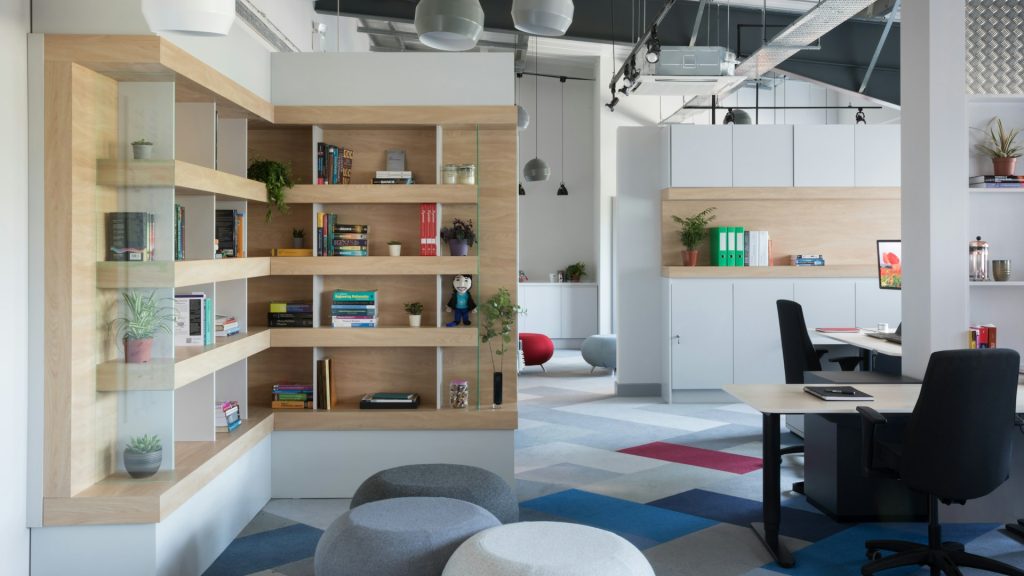
White wooden shelf with books and red ball
This is a caption

Natural elements now play a huge part in shaping the mood of my space. A small plant, a warm wooden tray, even the gentle texture of linen on my chair all make the room feel inviting. Soft, indirect lighting—like a warm lamp instead of a harsh overhead bulb—helps me ease into longer periods of focused work. Little rituals matter, too; lighting a candle or opening the window for a few minutes before starting helps me transition into a more mindful headspace.

Sound is another underrated element of workspace design. For me, certain types of quiet music—or sometimes nothing but the hum of my home—create a sense of stillness that encourages deeper concentration. Other creators thrive on background noise or bustling cafés. The key is paying attention to what genuinely helps you settle into your creative zone. Creating a playlist or a curated set of sounds for different parts of your workflow can make a surprisingly big difference.

Most importantly, I’ve learned to design my workspace around my energy, not trends. Some days I work best sitting at my desk, while on others, I find inspiration by sketching in a cozy corner or editing photos at the dining table. Instead of restricting my creativity to one spot, I’ve created multiple small “creative nests” around my home. It makes my process feel flexible, natural, and less pressured.

A slow, intentional workspace is not about perfection—it’s about creating an environment that feels nurturing, personal, and deeply aligned with the way you make things. When your space invites you to slow down and truly connect with your craft, creativity feels less like something you chase and more like something you return to.


Written By

Nguyễn Văn Long

Mình là Nguyễn Văn Long, đã tốt nghiệp cử nhân Đại học FPT ngành Digital Marketing, hiện tại mình đang là Chief Engineer của Công Ty Van Ống Nhựa. Tại website https://en.vannuoc.vn/ mình mong muốn chia sẻ và trao đổi những kiến thức liên quan đến ngành van, kiến thức liên quan đến các hệ thống công nghiệp,... Đồng thời giới thiệu đến các bạn những thiết bị công nghiệp chất lượng. Mình rất hoan nghênh những ý kiến đóng góp, cũng như những câu hỏi liên quan đến từ bạn đọc.

Read full bio

Join the Inner Circle

Get exclusive DIY tips, free printables, and weekly inspiration delivered straight to your inbox. No spam, just love.

Your email address Subscribe
Unsubscribe at any time. * Replace this mock form with your preferred form plugin

Designing a Workspace That Fuels Slow, Intentional Creativity

02/11/2025 NGUYễN VăN LONG 3 PHÚT ĐỌC 1.001 LƯỢT XEM 0 BÌNH LUẬN
5/5 (100 BÌNH CHỌN)

There’s a special kind of magic that happens when you step into a workspace that feels calm, grounded, and deeply in tune with your creative rhythms. Over the years, I’ve learned that the environment around me has just as much influence on my work as the tools I use. A cluttered or noisy space tends to make my mind feel scattered, while a quiet, thoughtfully curated corner seems to unlock my best ideas without forcing them. Creating a space that supports slow, intentional creativity has become an essential part of my routine as a maker.

The first change I made was embracing simplicity—true simplicity, not the Instagram version. I cleared out anything that didn’t serve a purpose, whether that purpose was functional or emotional. A workspace doesn’t have to be minimal, but I think it should feel breathable. When the surface of my desk has room for my hands, my tools, and my thoughts, everything flows more gently. I also realized that owning fewer supplies pushes me to use what I have in more inventive ways.

White wooden shelf with books and red ball
This is a caption

Natural elements now play a huge part in shaping the mood of my space. A small plant, a warm wooden tray, even the gentle texture of linen on my chair all make the room feel inviting. Soft, indirect lighting—like a warm lamp instead of a harsh overhead bulb—helps me ease into longer periods of focused work. Little rituals matter, too; lighting a candle or opening the window for a few minutes before starting helps me transition into a more mindful headspace.

Sound is another underrated element of workspace design. For me, certain types of quiet music—or sometimes nothing but the hum of my home—create a sense of stillness that encourages deeper concentration. Other creators thrive on background noise or bustling cafés. The key is paying attention to what genuinely helps you settle into your creative zone. Creating a playlist or a curated set of sounds for different parts of your workflow can make a surprisingly big difference.

Most importantly, I’ve learned to design my workspace around my energy, not trends. Some days I work best sitting at my desk, while on others, I find inspiration by sketching in a cozy corner or editing photos at the dining table. Instead of restricting my creativity to one spot, I’ve created multiple small “creative nests” around my home. It makes my process feel flexible, natural, and less pressured.

A slow, intentional workspace is not about perfection—it’s about creating an environment that feels nurturing, personal, and deeply aligned with the way you make things. When your space invites you to slow down and truly connect with your craft, creativity feels less like something you chase and more like something you return to.

Le Dang

Lê Đăng

Co-Founder tại Viva - Van giá rẻ

Tôi là Lê Đăng, Co-Founder & Marketing Manager của Viva, chuyên gia với 20 năm kinh nghiệm thực chiến trong ngành van công nghiệp. Qua blog này, tôi chia sẻ những kiến thức chuyên sâu nhằm mang đến giá trị thực tiễn, hữu ích và thiết thực nhất cho độc giả trong và ngoài ngành.